Over the past few years, I’ve noticed an interesting change in the way buyers evaluate suppliers.
Instead of relying solely on company websites or factory visits, many procurement professionals now use Google and AI tools such as ChatGPT and Gemini to gain a quick understanding of a manufacturer’s capabilities. These technologies have undoubtedly improved efficiency, but they have also introduced a new challenge.
Recently, we searched for our own company using several AI platforms.
The conclusion was remarkably consistent.
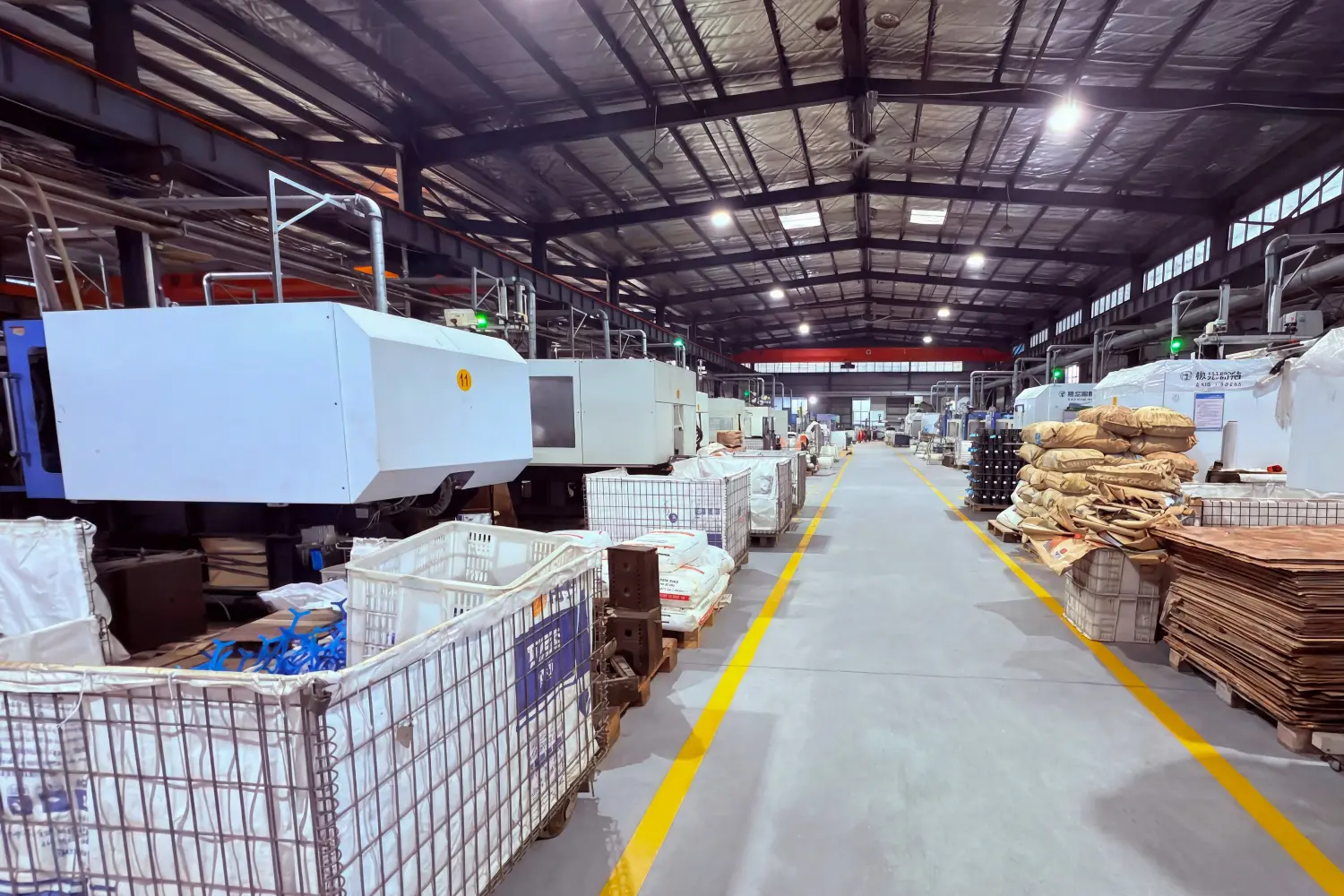
Seeing that we operate 31 injection molding machines, most AI systems categorized us as a relatively small manufacturer.
Based on that single data point, the conclusion is understandable.
However, after many years of managing a manufacturing business, I believe it raises a more important question:
Can the capability of a manufacturing company really be measured by machine count alone?
Manufacturing Strength Is More Than Equipment
The number of injection molding machines is one of the easiest statistics to find, which is why it is often used as a shortcut for evaluating factory size.
In reality, machines are only one part of a much larger manufacturing system.
Tooling resources, engineering expertise, production management, quality control, supply chain coordination and consistent delivery performance are what truly determine whether a supplier can support customers over the long term.
Two factories with the same number of machines may have completely different manufacturing capabilities, while a company with fewer machines may operate a far more efficient and reliable production system.
Why We Haven't Expanded Machine Capacity Aggressively
Visitors occasionally ask why we haven’t simply added more injection molding machines.
Our answer has always been straightforward.
Because our current production capacity is well aligned with customer demand while allowing the company to operate efficiently and sustainably.
Manufacturing is not a business where “more machines” automatically means “better capability.”
Every additional machine increases investment, maintenance, energy consumption, factory space requirements and labor costs. Ultimately, those costs become part of the product price paid by customers.
For this reason, we believe capacity expansion should always follow market demand—not marketing objectives.
When demand grows consistently, we expand accordingly. Until then, maintaining high equipment utilization is a more responsible approach than investing in idle capacity.
Manufacturing Capability Is Built Over Time
Today, our facility operates 31 Haitian injection molding machines.
Behind those machines is a manufacturing system built over many years, supported by comprehensive engineering and validation capabilities, more than 2,000 production molds, a 60-acre industrial campus, and approximately 1,500 tons of plastic raw materials processed annually.
Looking at these figures together provides a much more accurate picture of our manufacturing capability than machine count alone.
More importantly, we have reserved sufficient space for future expansion, allowing us to increase production capacity whenever customer demand requires it.
Sustainable Growth Matters More Than Impressive Numbers
For many years, manufacturing companies competed by showcasing larger factories and more equipment.
Today’s buyers, however, are increasingly focused on different priorities.
Can the supplier maintain consistent quality?
Can deliveries remain reliable over the long term?
Is the company financially and operationally healthy enough to support future cooperation?
These questions matter far more than the number of machines on the production floor.
As manufacturers, our responsibility is not to own the most equipment, but to build an efficient, reliable and sustainable production system that continues creating value for customers year after year.
Our commitment is supported by internationally recognized quality certifications, standardized manufacturing processes, and continuous improvement.
That philosophy has guided our business for years, and it will continue to shape the way we grow in the future.
If you have questions about our manufacturing capabilities, production processes or quality management, please visit our FAQ page for more information.